
Happy National Pie Day
January 23 is National Pie Day! In honor of that, here’s some information on the history of pie because it hasn’t always been how we know it today.
A (Brief) History of Pie
Pie can be traced back to approximately 9500 BCE, when it originated in Egypt. However, it was a lot different than the pie we know and love today. The first pies were crafted with ground grains (barley, wheat, or oats) that were combined with water to make a dough and then shaped into an oval and filled with ingredients like nuts, honey, and meat. Back in these times, pie dough was used as a preservation mechanism for food, while also providing a portable meal for people traveling or working.
The Egyptians weren’t the only ancient civilization to adopt pie into their culture. The Greeks altered the concept from Egypt by making a flakier type of pastry shell. The Romans incorporated different meats and seafoods into their pies. Additionally, the Romans were the first to make pie with a top and bottom crust.
The term “pye,” or what we know as “pie,” originated in medieval England. English pies were filled with a variety of things, including beef, lamb, and duck, often being spiced with currents, dates, or pepper. In the 1500’s, fruit pies began to emerge. Fun fact: Queen Elizabeth I was a huge fan of cherry pie.
Sweeter pies became more common by the 17th century. As pie spread throughout the world, it became a culinary creation with a unique twist from culture to culture.
Pie traveled to the United States, but despite popular belief, back in 1621 (the first Thanksgiving), the Pilgrims were not eating pumpkin pie, the now classic staple. Rather, English Immigrants stayed true to meat-based pies from back home.
As the colonists gained more access to new ingredients and different sweeteners, pie expanded even further. Sweeteners like molasses, maple syrup, cane sugar, and honey could be combined with fruits and squashes like apple, pear, quince, pumpkin, and blueberry, leading to more popularity amongst sweeter pies.
New England became known as the “Great Pie Belt.” Over time, regions throughout the United States claimed their own unique pie specialties.
Today, different forms of pie are still prevalent throughout the entire world. Pie takes place in various forms throughout many places, which is what makes it so special. There are sweet and savory pies, some of which are handheld, some of which are plated. For many, pie symbolizes tradition, while bringing feelings of comfort and love, all of which is worth celebrating, so once again, Happy National Pie Day!
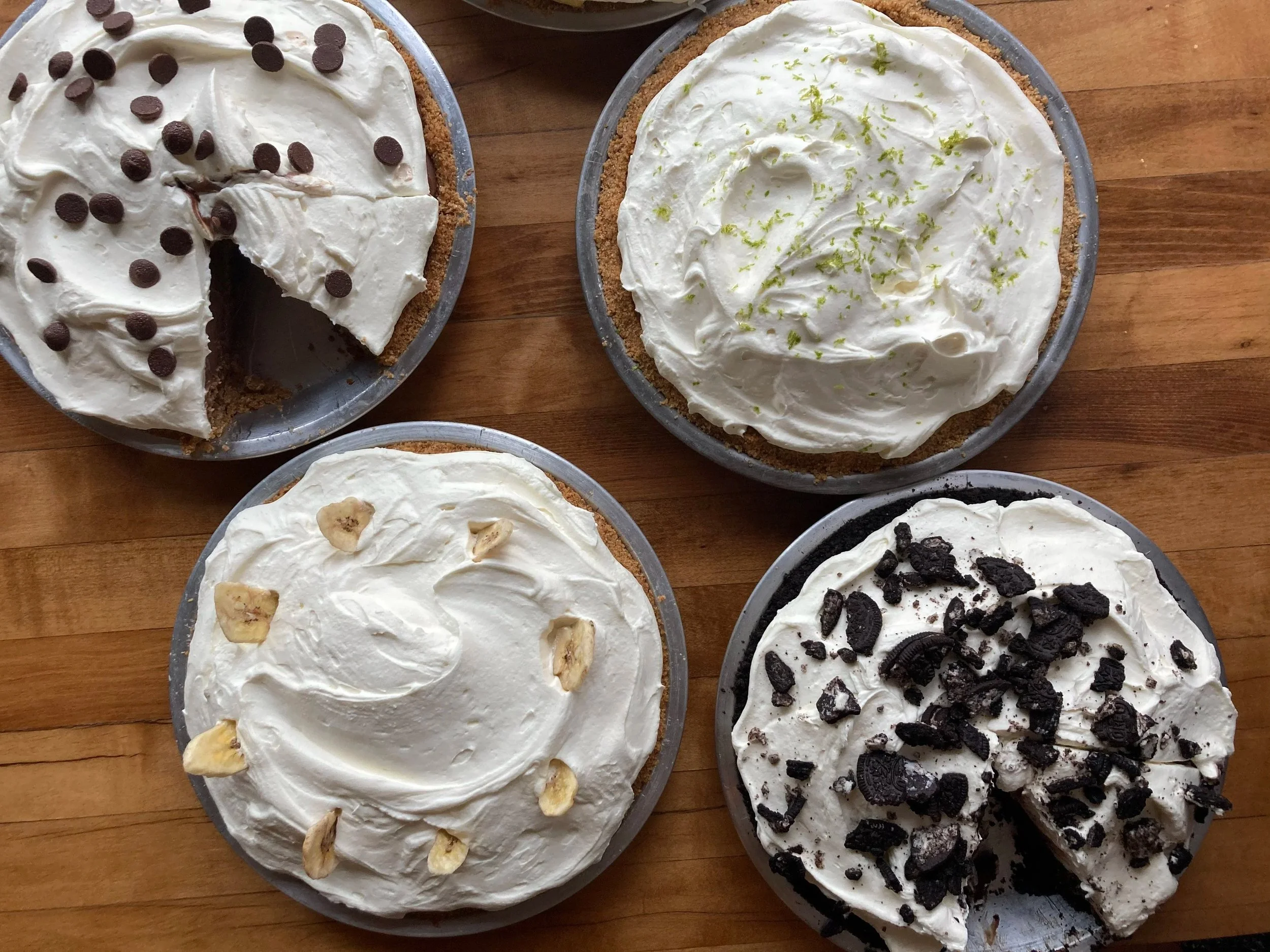
Honeypie’s handmade pies - order one for yourself today!
Interested in learning more about making your own pies?
Sign up for a pie class! Taught by the expert baking team in the Honeypie Bakeshop.
· Wednesday, January 28: Biscuits
· Tuesday, February 10: Puff Pastry Hand Pies
· Wednesday, February 18: Cream Pies and Shortbread Crust
· Tuesday, February 24: Biscuits
· Wednesday, February 25: Fresh Berry Tart with Pate Sucree
· Wednesday, March 11: Chicken Pot Pie
· Tuesday, March 17: Cherry Pie and Lattice Crust
· Wednesday, March 18: Chocolate Silk Pies
· Tuesday, March 24: Savory Hand Pies (registration coming soon)
· Wednesday, April 1: Pie Crust Science with Local Flour (registration coming soon)
· Tuesday, April 7: Butter Crust and Apple Pie (registration coming soon)
· Wednesday, April 15: Savory Crostatas and Dinner Pies (registration coming soon)
· Tuesday, April 21: Baking with Meringue – Lemon Pies (registration coming soon)
· Wednesday, April 22: Rye Puff Pastry Tarts(registration coming soon)
· Wednesday, May 6: Mini Pies for Mother’s Day (registration coming soon)
· Tuesday, May 12: Biscuits (registration coming soon)
· Wednesday, May 13: Strawberry Pretzel Pies (registration coming soon)
· Wednesday, May 20: Cream Pies and Shortbread Crust
· Thursday, May 21: Strawberry Rhubarb Pie (registration coming soon)
All pie classes are taught at the Honeypie Bakeshop. We can’t wait to see you there!